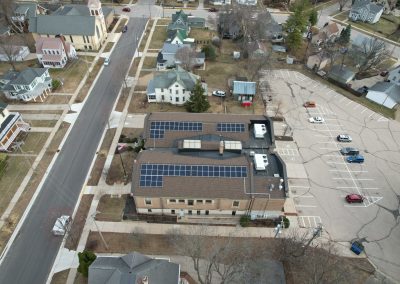
Spectrum News 1’s article highlights a partnership between Milwaukee Habitat for Humanity and Arch Solar to install solar panels on dozens of newly built affordable homes across Milwaukee neighborhoods. The initiative focuses on bringing renewable energy and long-term utility savings to families purchasing Habitat homes, particularly in the Harambee and Midtown communities. The project demonstrates how affordable housing and clean energy can work together to improve financial stability and neighborhood revitalization.
The article explains that solar panels were installed on 35 Habitat for Humanity homes in Milwaukee as part of the statewide “Grow Solar for Humanity” initiative. The program was coordinated through partnerships involving Habitat for Humanity, the Midwest Renewable Energy Association (MREA), Focus on Energy and Arch Solar. Focus on Energy contributed approximately $550,000 to help fund the installations, allowing homeowners to benefit from renewable energy without carrying the upfront costs typically associated with solar systems.
Chris Garrison, construction and operations director for Milwaukee Habitat for Humanity, emphasized that the homes were designed to provide affordable ownership opportunities while reducing ongoing living expenses. Because energy bills continue to rise, adding solar panels to already energy-efficient homes helps families save money immediately after moving in. Habitat leaders believe these savings will strengthen long-term financial security for homeowners and contribute to healthier neighborhoods overall.
The article also features comments from Arch Solar representatives, who described the installations as an opportunity to expand solar access to communities that historically have had limited exposure to renewable energy. Arch Solar leaders explained that solar power offers both environmental benefits and protection against increasing utility costs. By lowering monthly electric bills, the systems provide families with more predictable household expenses and greater economic stability.
Overall, the article presents the project as a model for combining sustainability, affordable housing and community development. Supporters hope the initiative will increase awareness of solar energy across Wisconsin while helping families achieve both homeownership and long-term energy savings.