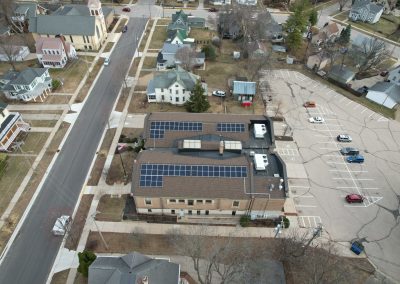
The article “Hunger Task Force Energizes Fight Against Hunger with Solar Installation” highlights how Milwaukee-based nonprofit Hunger Task Force combined sustainability and community service by installing a large rooftop solar array at its food bank headquarters. The project reflects the organization’s commitment to both environmental responsibility and efficient stewardship of donor resources while supporting its mission to fight hunger across Wisconsin.
Hunger Task Force installed an 89-kilowatt solar system consisting of 165 rooftop solar panels at its West Milwaukee facility. The system was designed and installed by Arch Solar and is projected to generate approximately 125,000 kilowatt-hours of electricity annually. According to the organization, this amount of energy will offset nearly 20% of the food bank’s total electricity usage while producing significant long-term financial savings. The nonprofit estimates the system will reduce annual energy costs by more than $8,000 and save over $300,000 during the array’s 30-year lifespan.
Executive Director Sherrie Tussler emphasized that Hunger Task Force operates as a 100% community-supported organization, making financial stewardship especially important. By lowering utility costs through renewable energy, the nonprofit can redirect more funding toward providing healthy food for children, families, and seniors facing food insecurity. The organization views the project as an investment in both sustainability and community impact.
The article also explains that the project became possible through a collaborative effort involving several Wisconsin renewable energy organizations. Funding and support came from RENEW Wisconsin’s Solar for Good initiative, the Couillard Solar Foundation, Legacy Solar Co-op, Focus on Energy, and private donors. These partnerships helped reduce installation costs and expand access to solar technology for nonprofit organizations.
Beyond the solar installation, Hunger Task Force has implemented additional energy-efficiency upgrades, including LED lighting, smart HVAC systems, and Energy Star refrigeration equipment. Together, these improvements reinforce the organization’s broader commitment to environmental sustainability and responsible operations.
Arch Solar representatives described the project as an opportunity to support meaningful local change by combining renewable energy with social impact. The article ultimately portrays the solar installation as a model for how nonprofits can reduce operating costs, strengthen sustainability efforts, and reinvest savings into serving their communities more effectively.