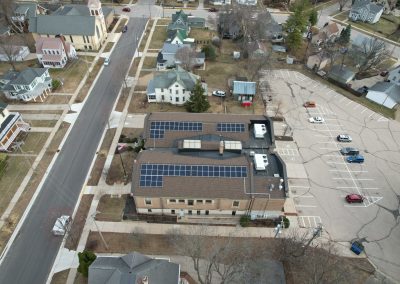
Despite federal rollbacks of clean-energy incentives, Wisconsin’s renewable-energy industry continues to grow as improving technology, rising electricity demand and concerns about grid reliability make solar and battery storage increasingly attractive.
JD Smith, director of marketing and public relations at Milwaukee-based Arch Solar, told Wisconsin Public Radio that customer attitudes toward battery storage have changed significantly. Six years ago, roughly one in four customers asked about batteries, often hoping to disconnect completely from the electric grid. Many reconsidered after learning that a fully off-grid system could cost more than $50,000. Today, at least half of Arch Solar’s customers move forward with batteries, typically seeking enough backup power to operate essential systems during an outage. Smith said consumers are no longer taking the reliability of the grid for granted.
Although the federal government eliminated numerous incentives created through the Inflation Reduction Act, Smith expects established solar companies to withstand the shifting political environment. Solar and battery technologies have advanced rapidly, while electricity demand is climbing as energy-intensive data centers expand throughout Wisconsin and the nation.
Emma Heins, a principal at Advanced Energy United, said renewable energy remains one of the fastest and least expensive options for adding new power to the grid. Electric-vehicle adoption has been slower in Wisconsin, however, partly because limited charging infrastructure contributes to range anxiety. At the same time, developers may hesitate to build more chargers until EV ownership increases. Federal funding is helping Wisconsin expand its public charging network and address that challenge.
Some Inflation Reduction Act programs also remain available because Wisconsin received funding before the federal rollback. The Home Efficiency Rebates program offers up to $10,000 for qualifying improvements such as insulation, windows, roofing and appliances. The Home Electrification and Appliance Rebates program provides eligible low- and moderate-income households with as much as $14,000. Funding for these programs is expected to remain available through approximately 2031.