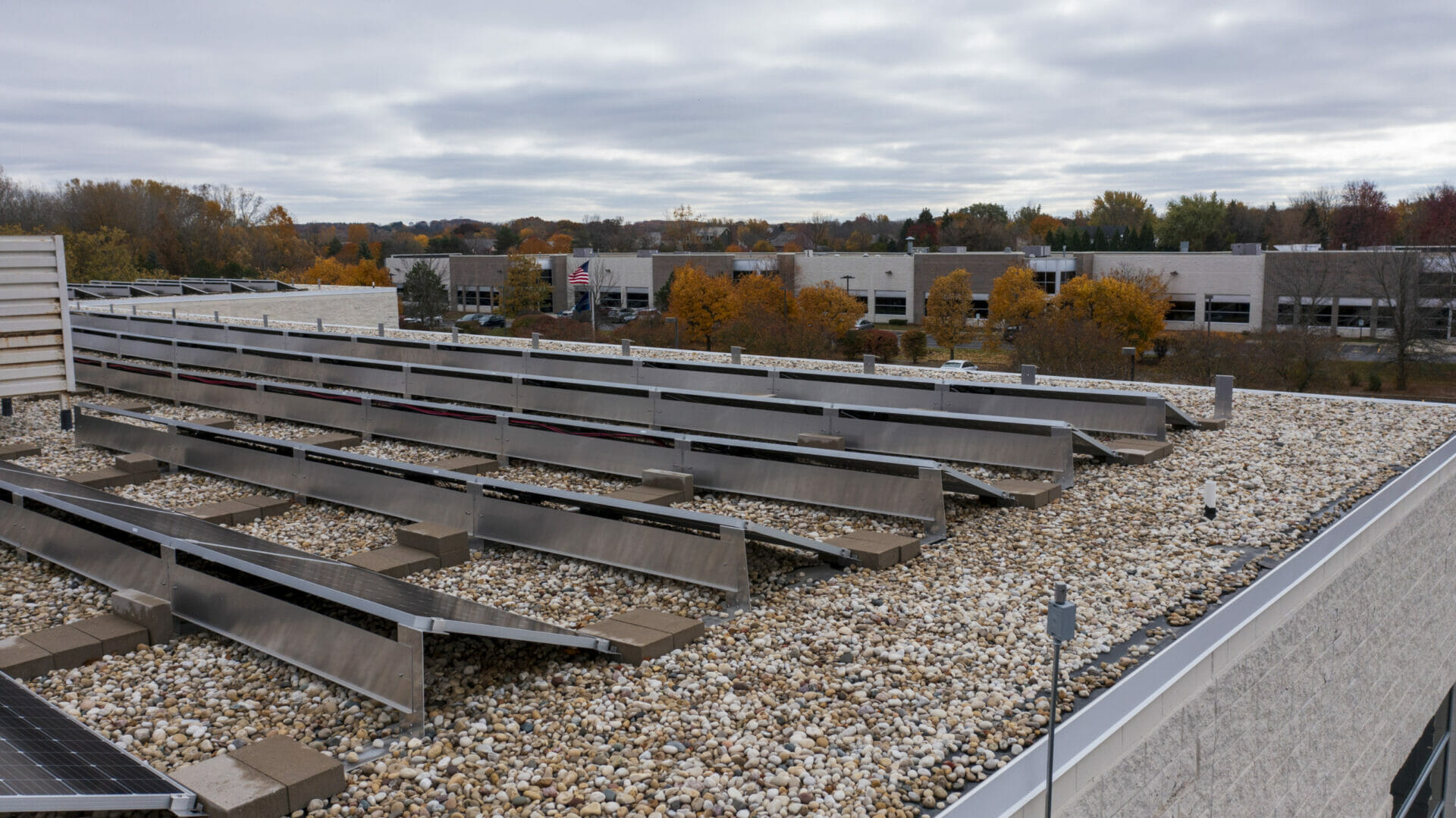
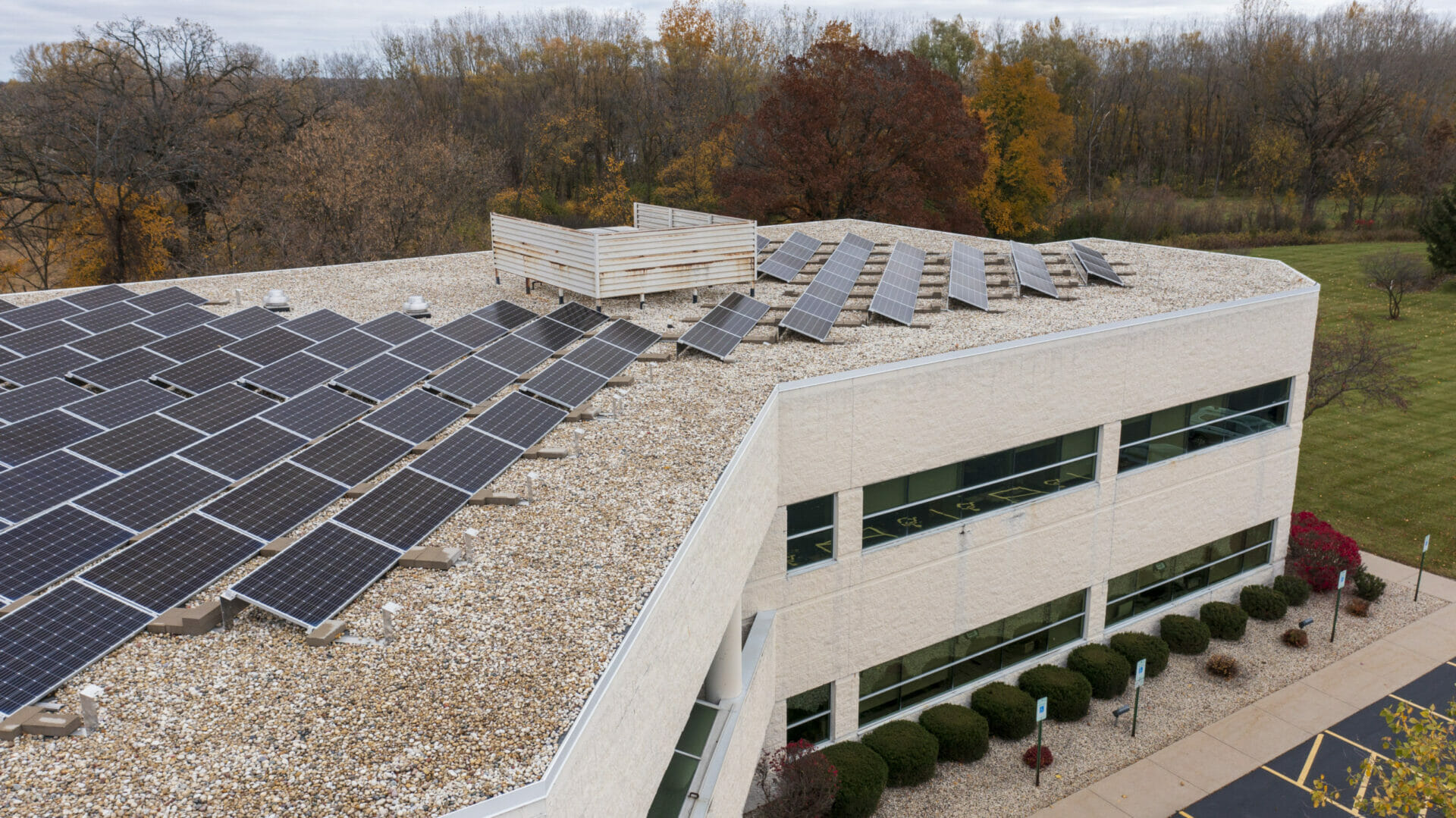
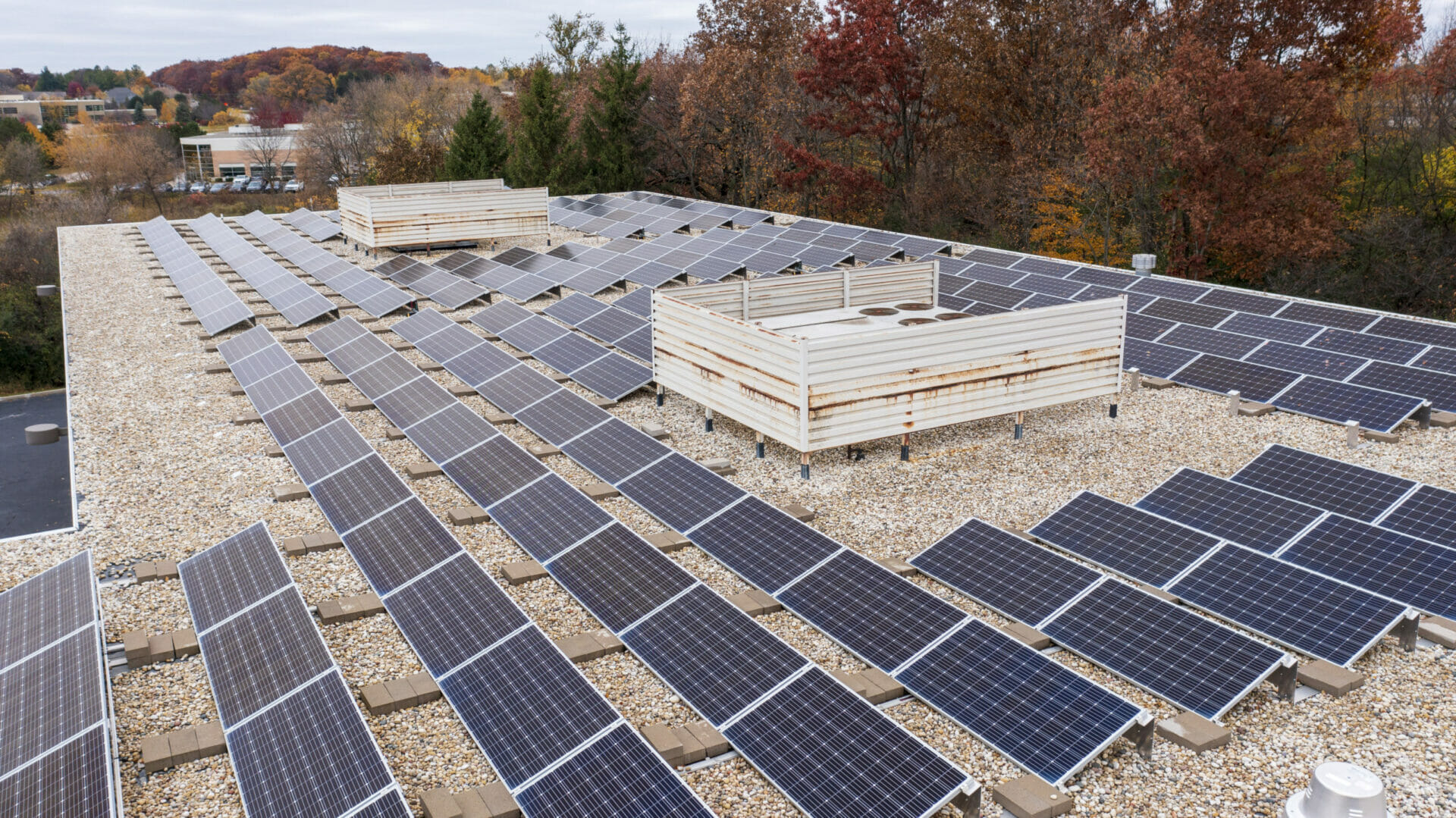
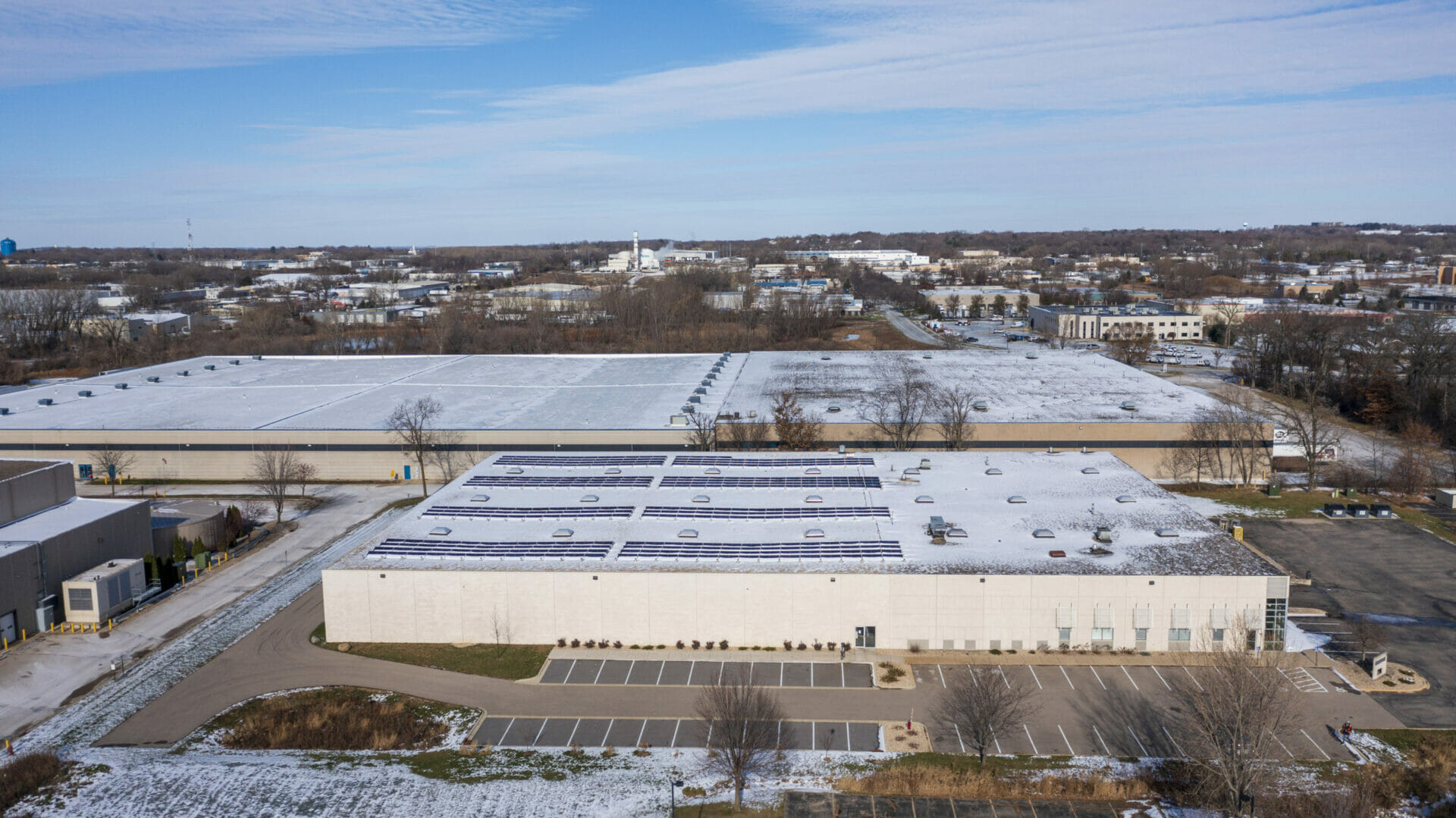
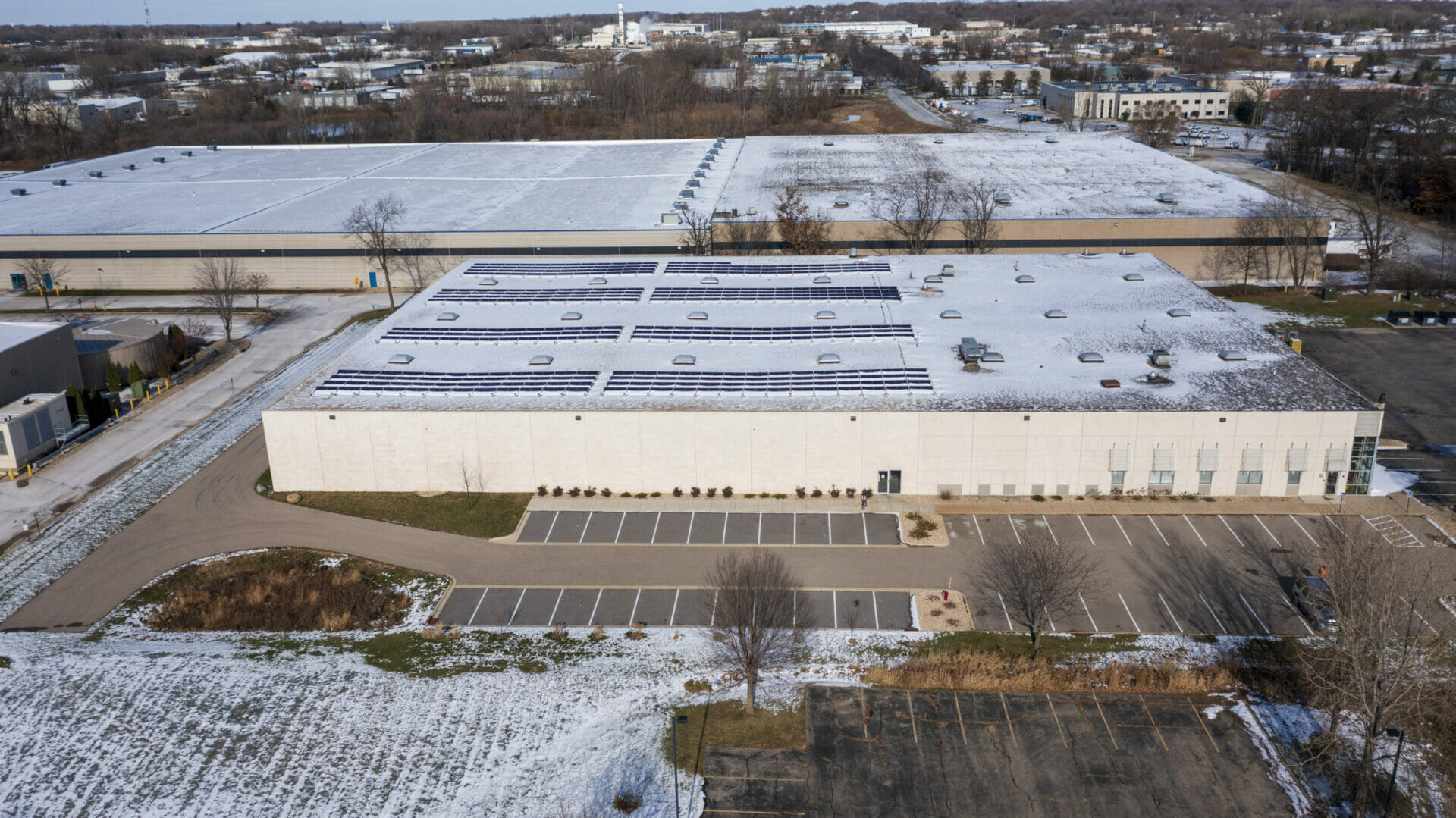
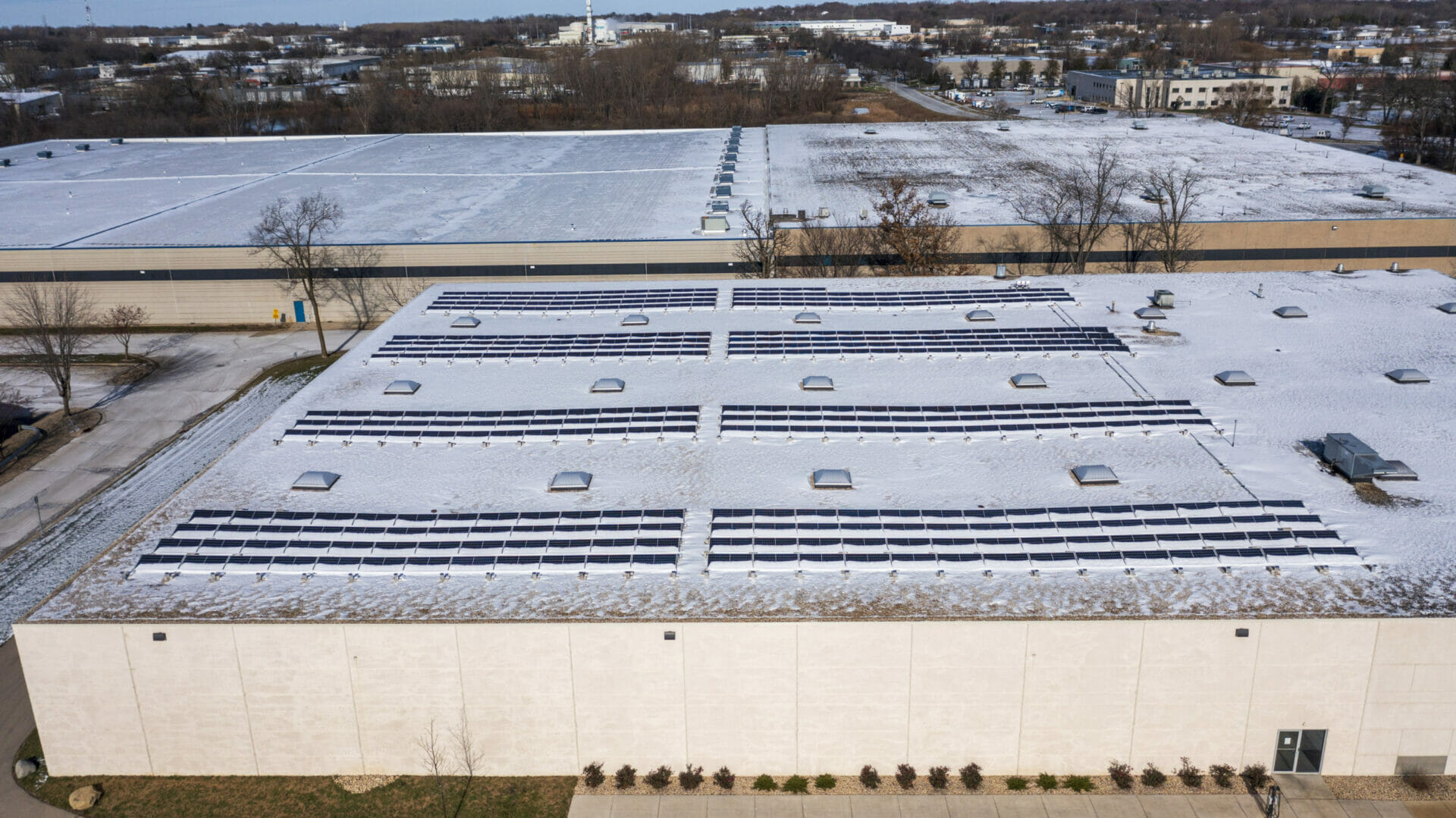
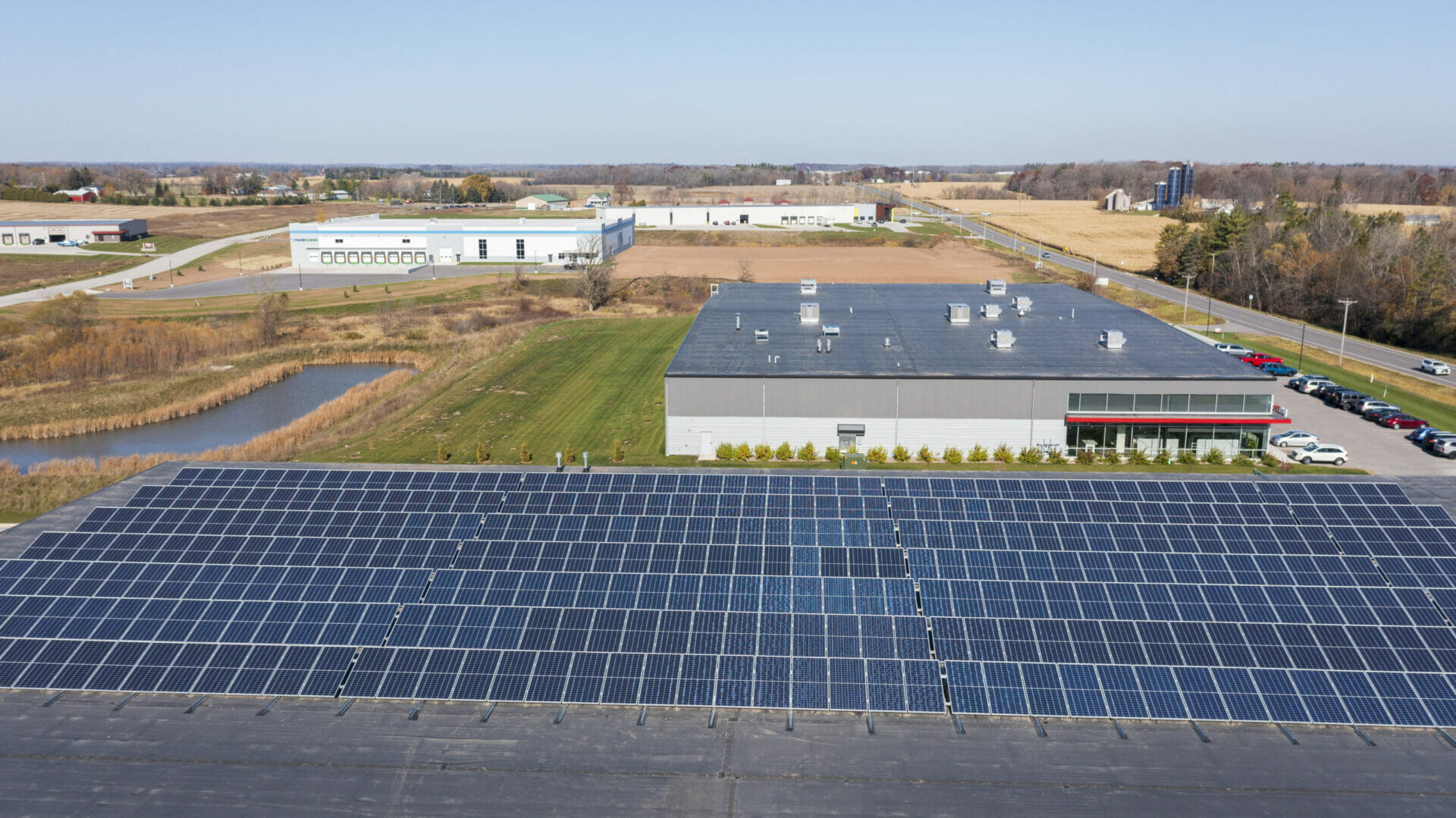
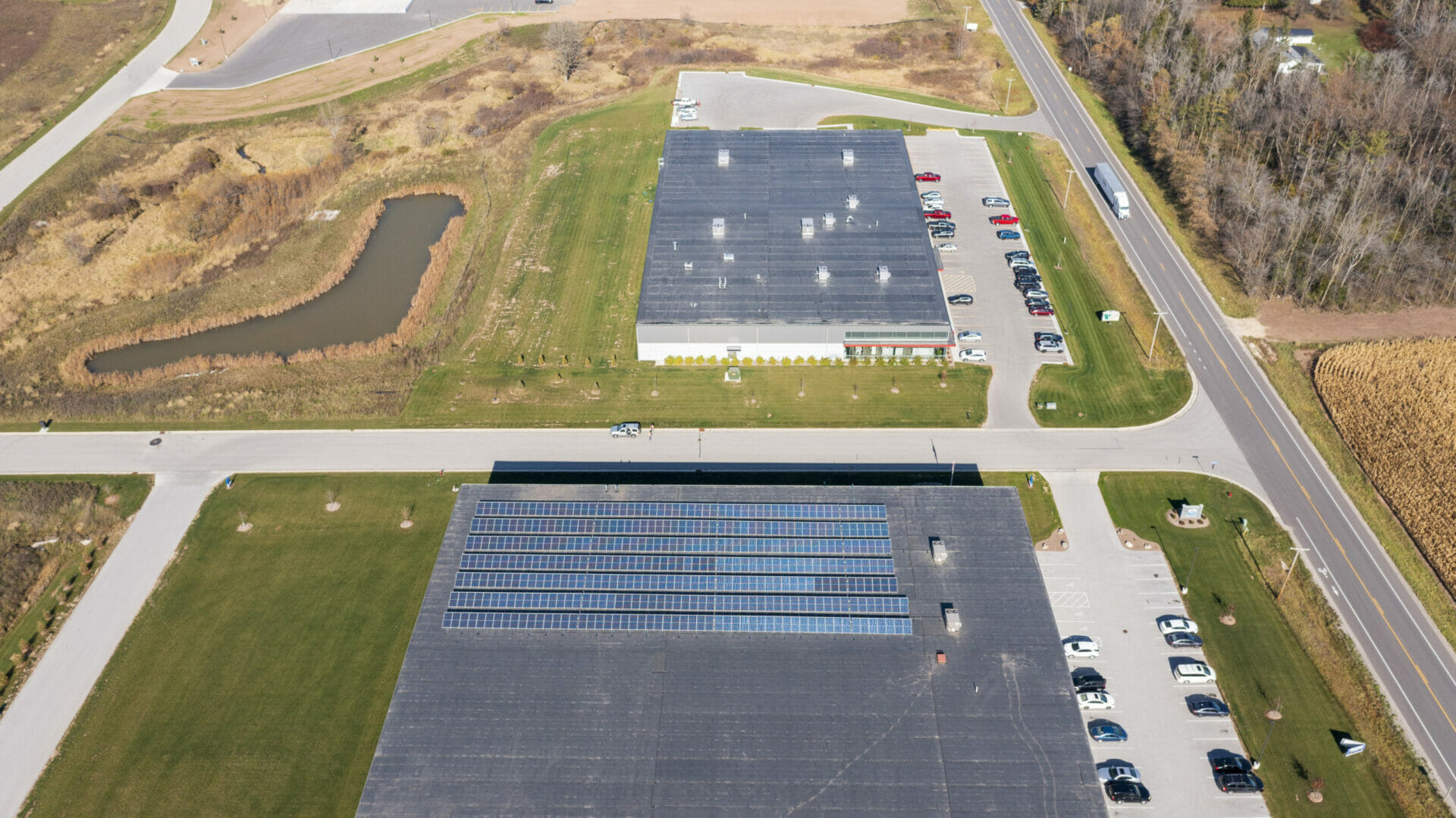
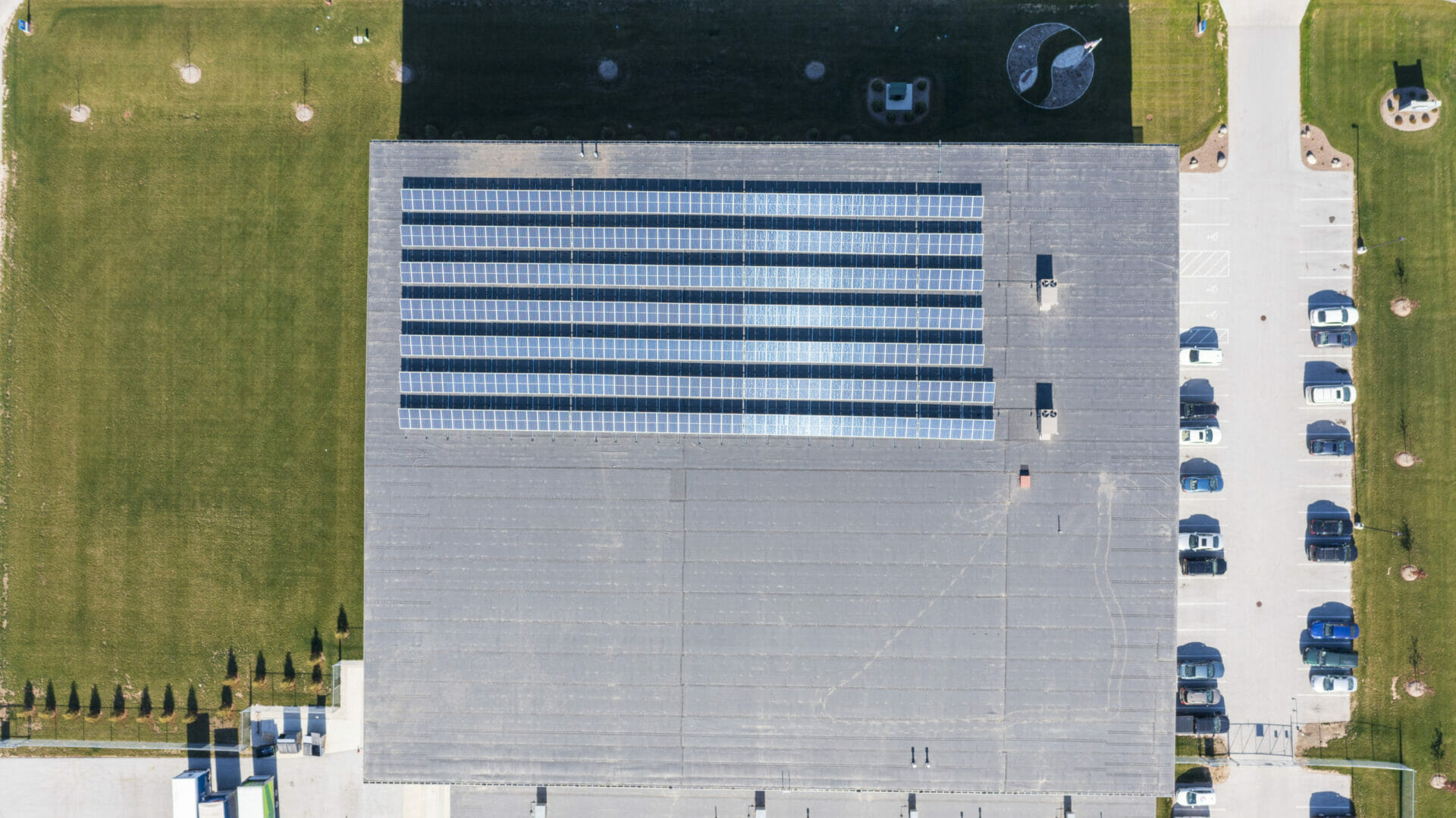
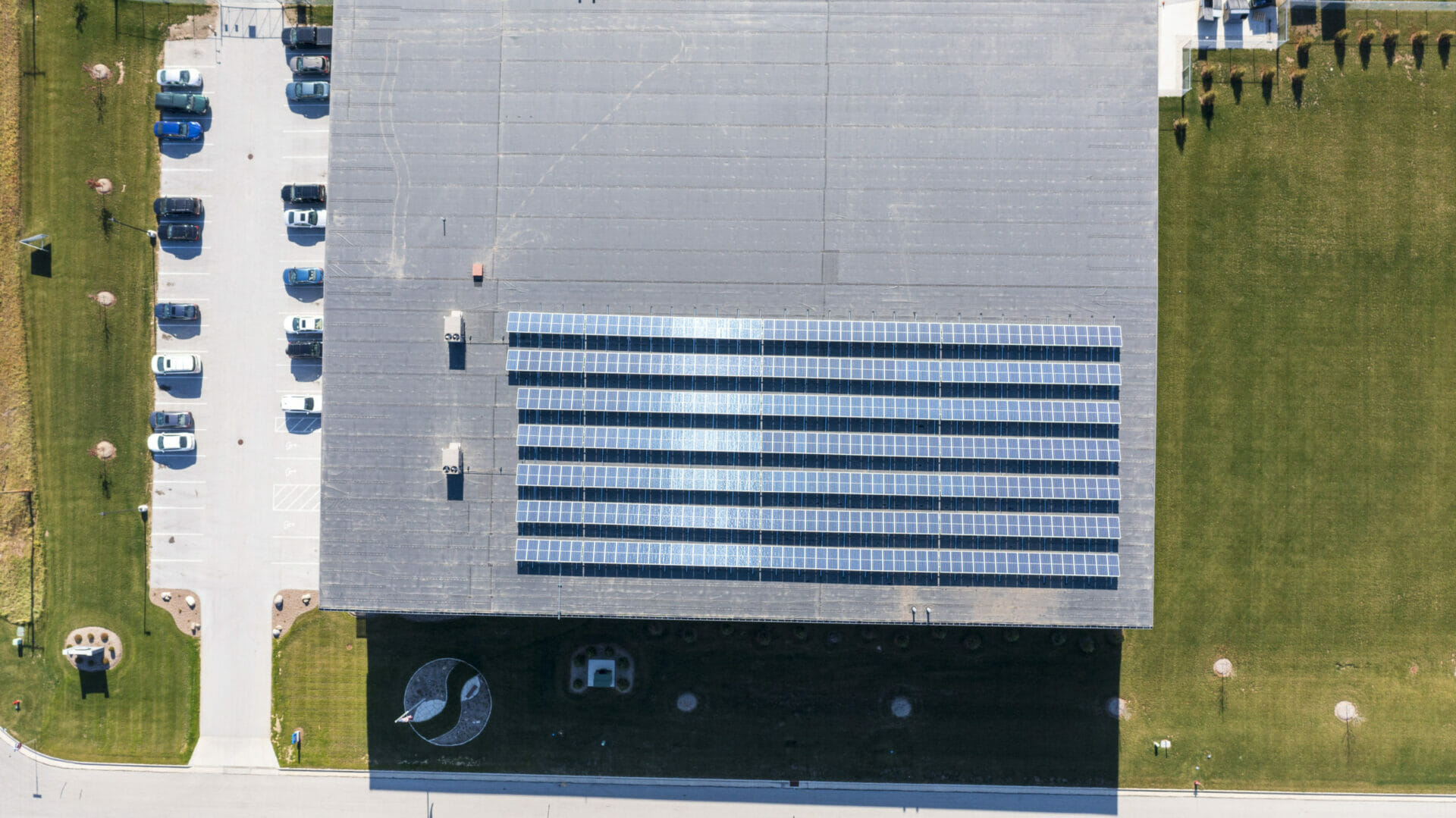
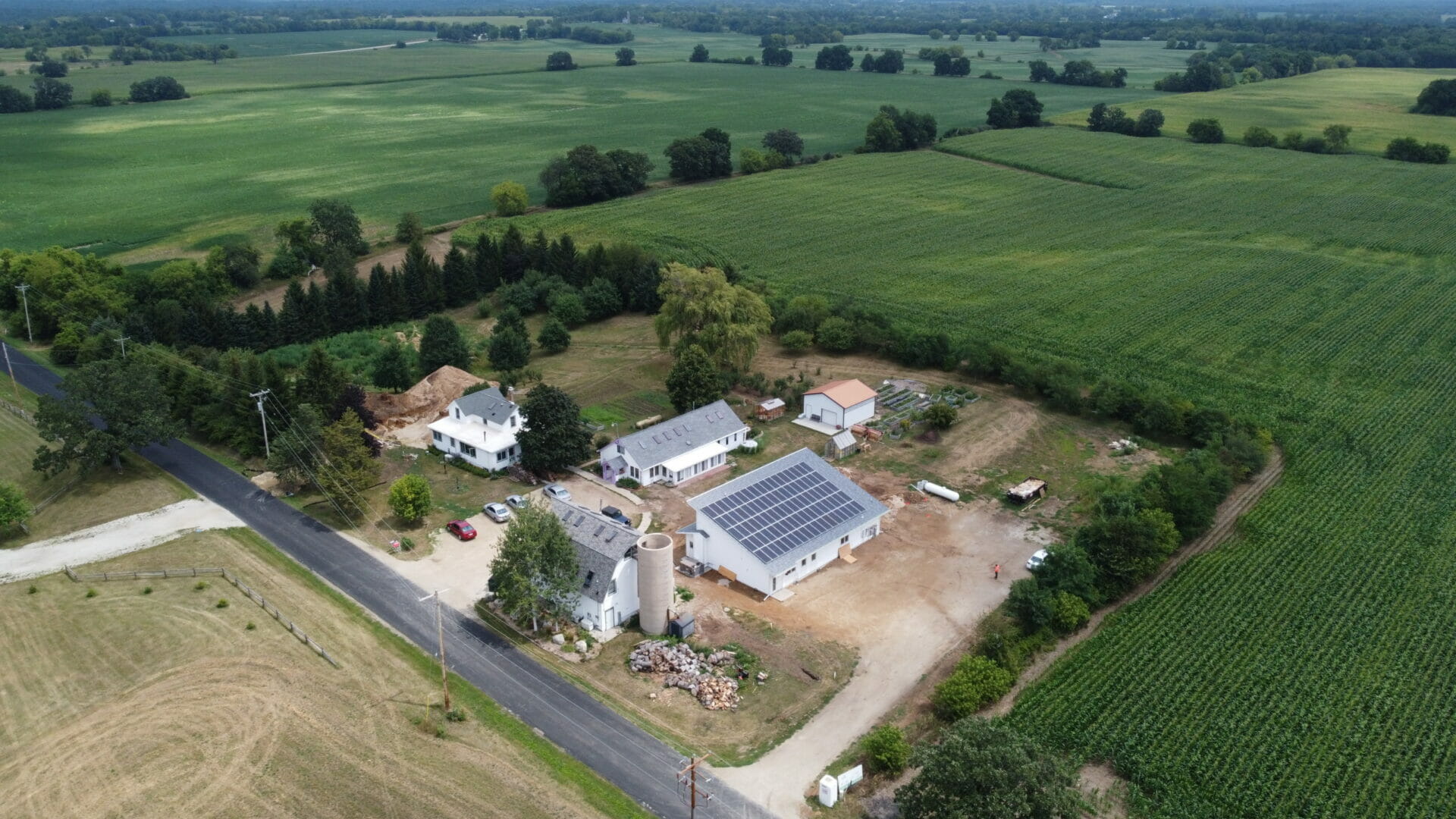
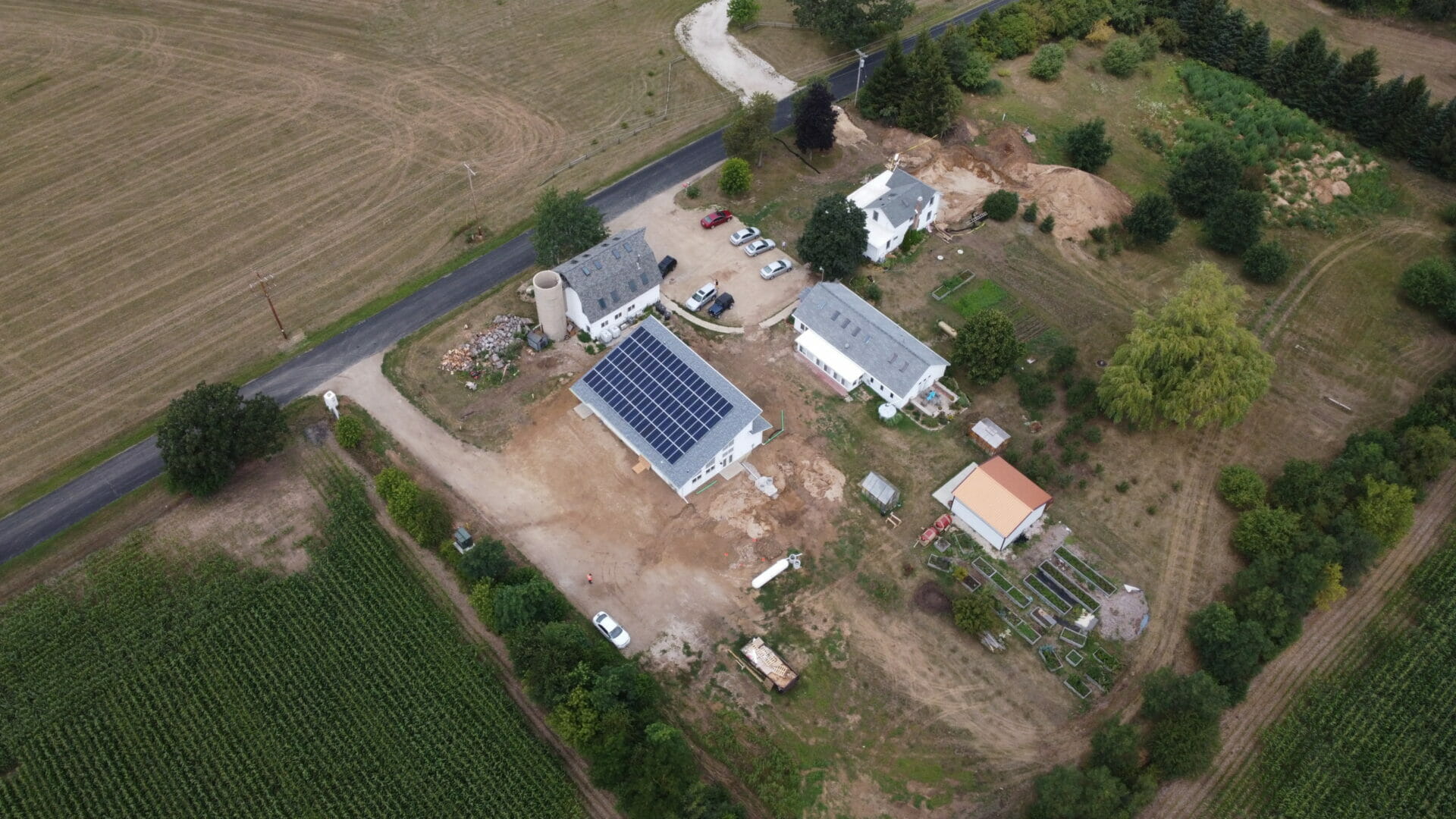
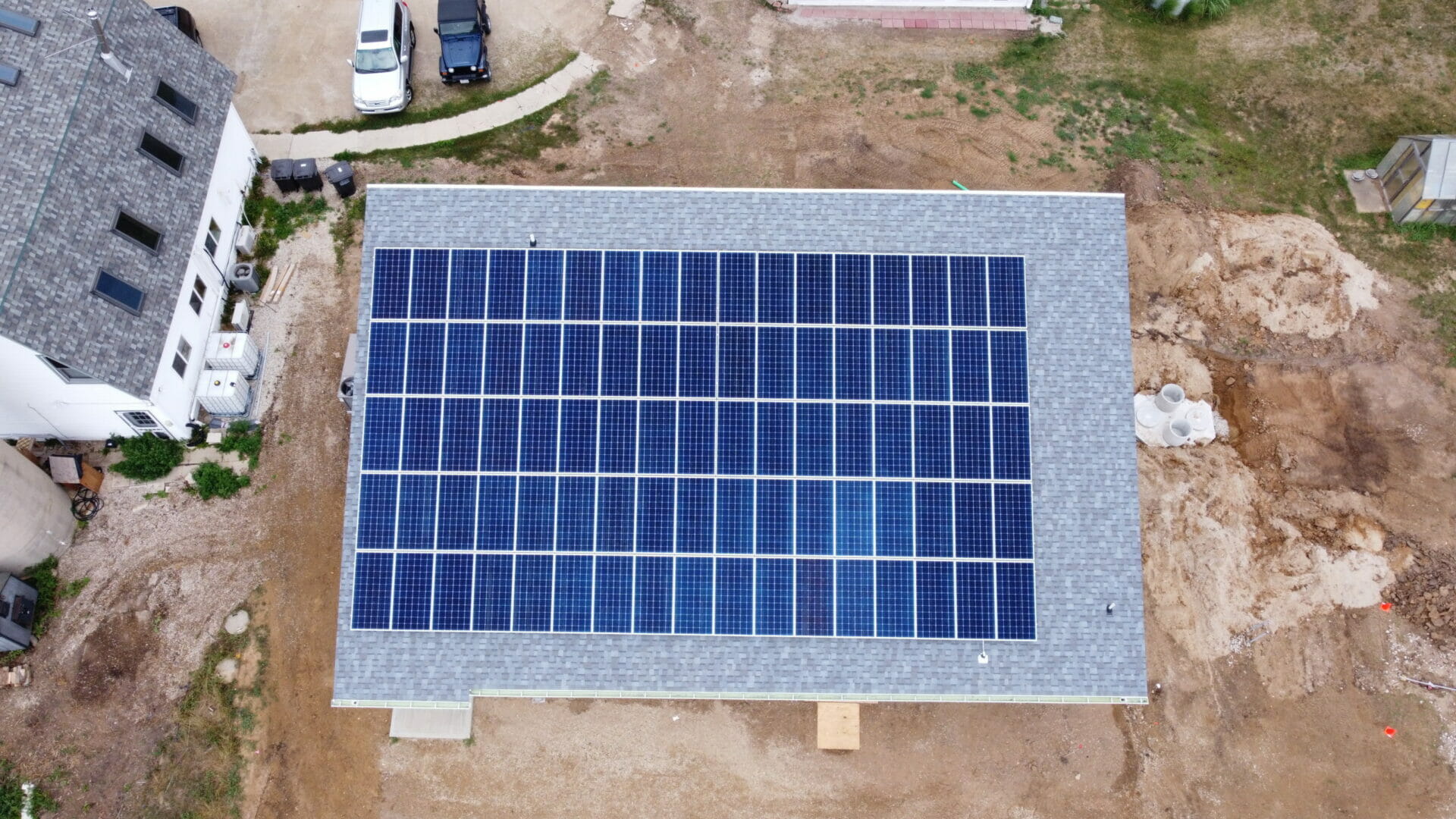
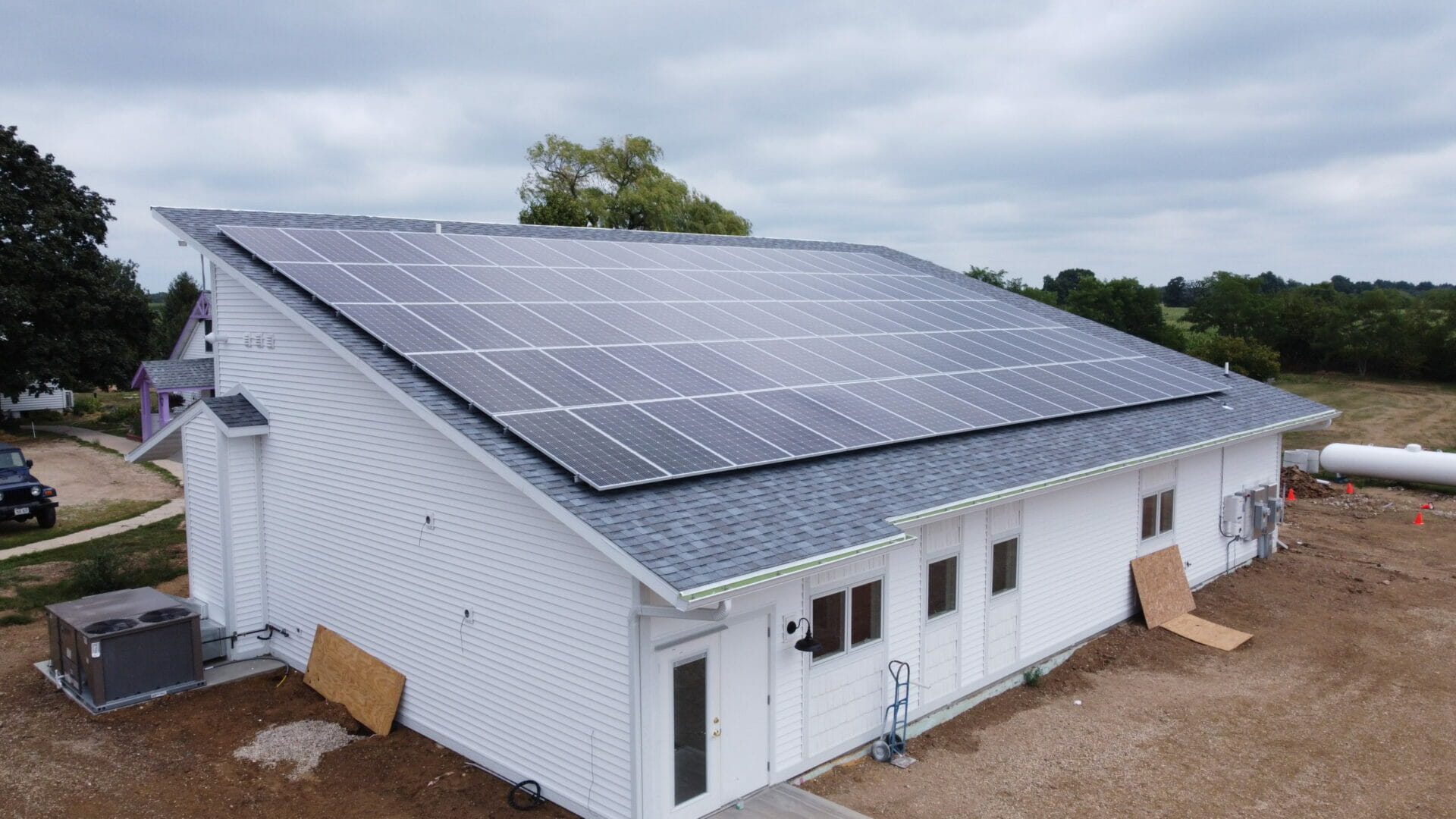
Solar energy storage can be the key to outlasting Wisconsin’s severe storm season for your family. Wisconsin residents are no strangers to extreme weather, often resulting in local power outages. Investing in solar power and battery backups for your home can keep the power on during blackouts, protecting your family and your property.
How Do Solar Panels & Battery Backups Work?
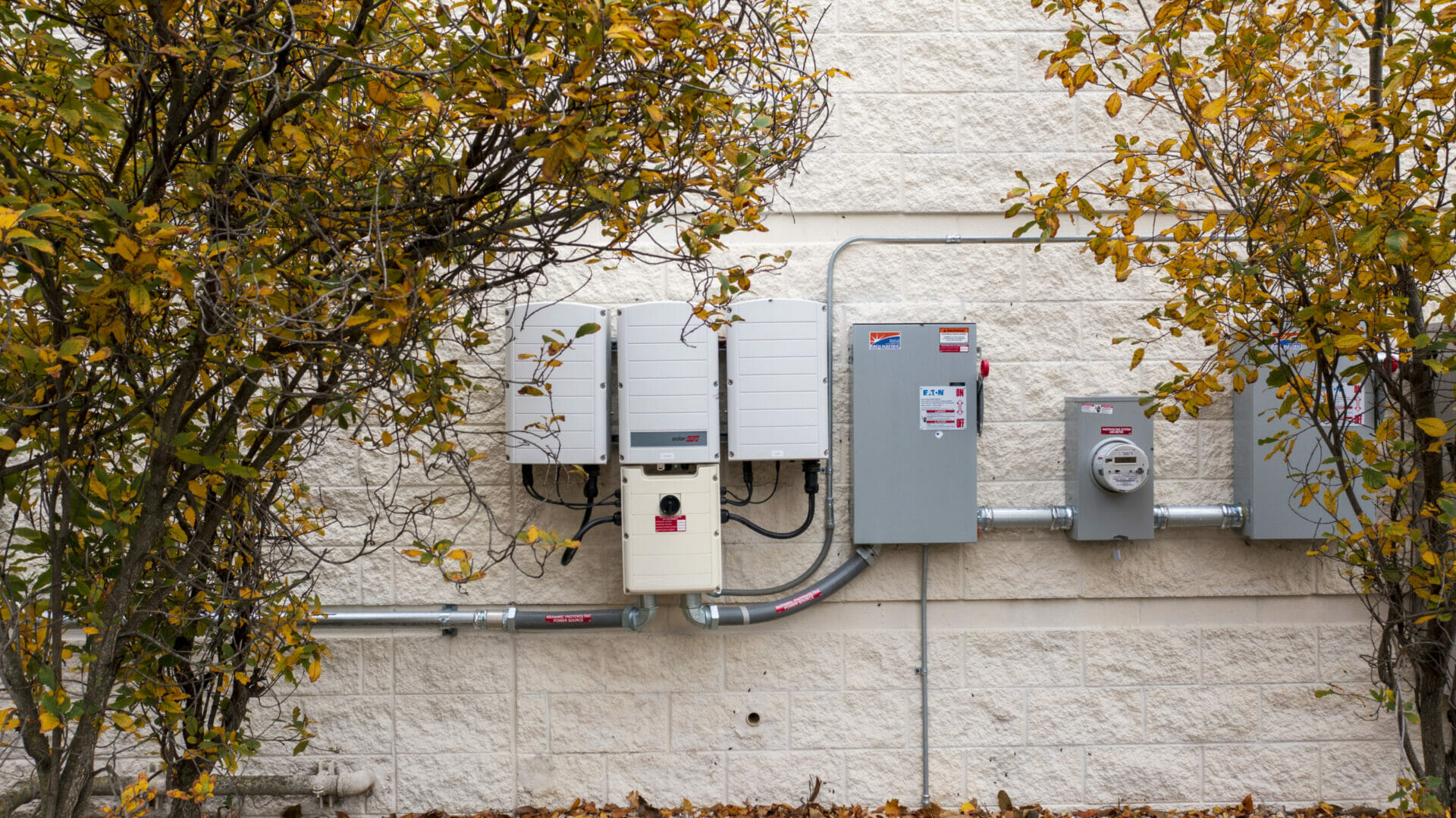
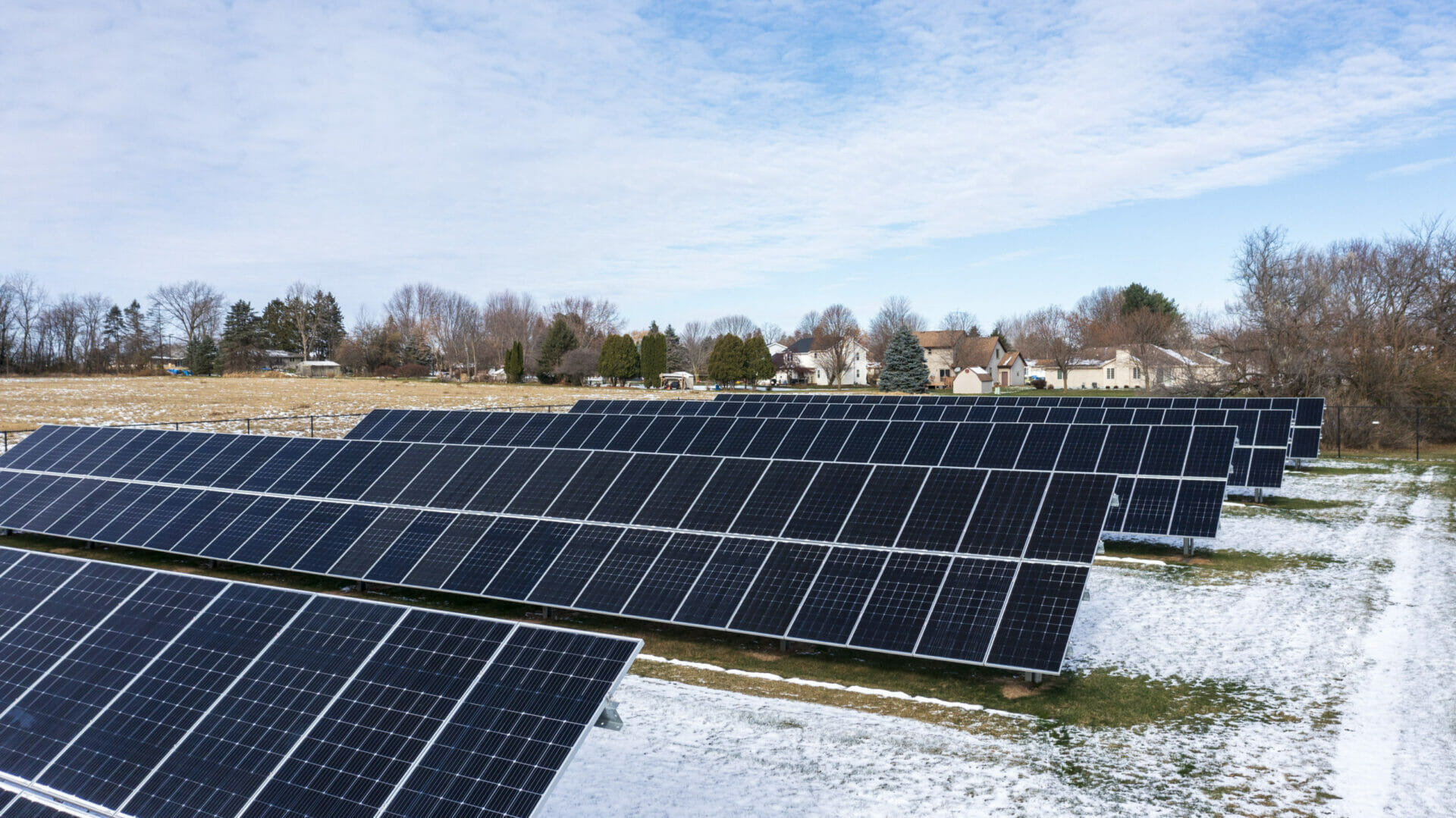
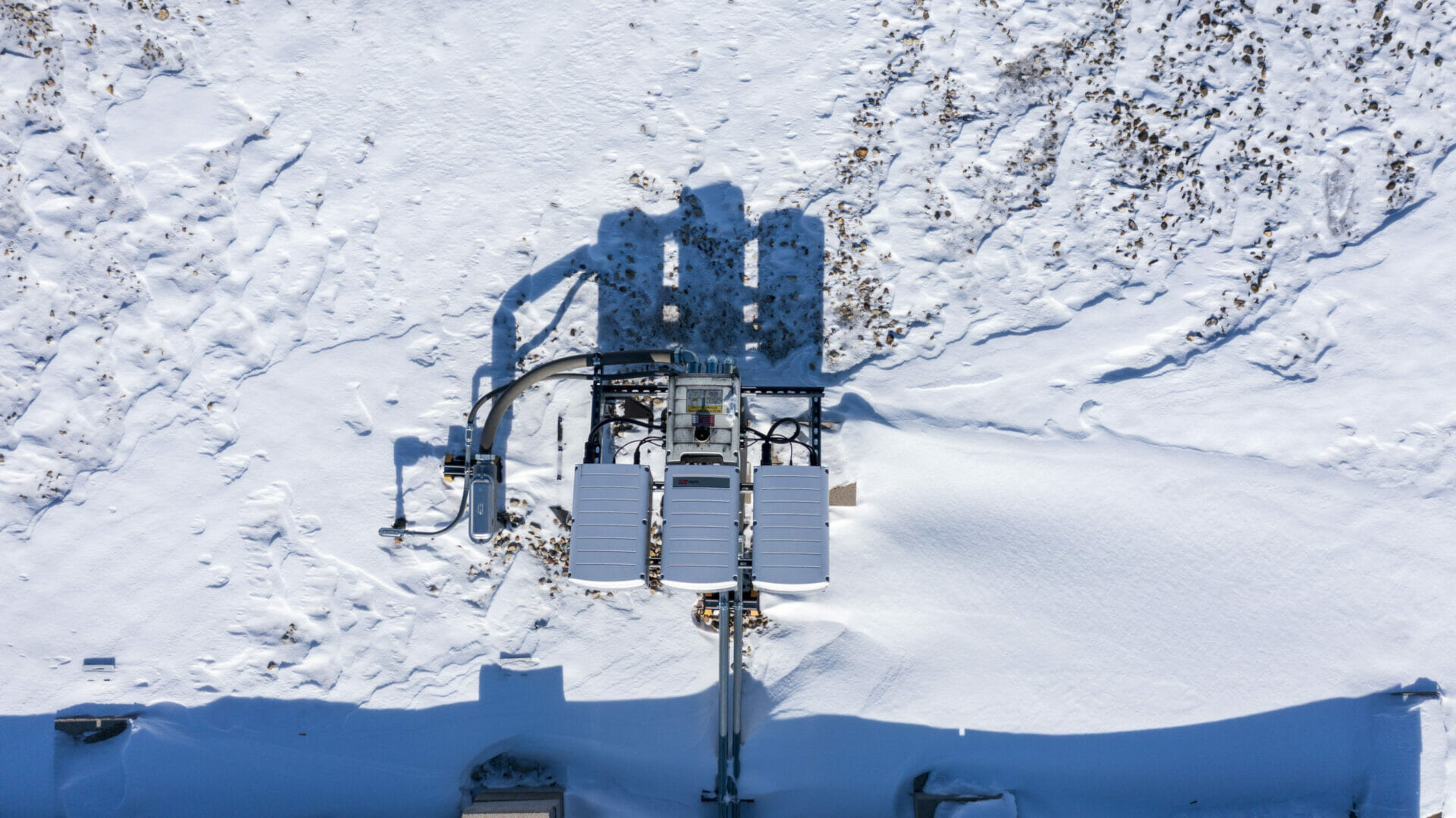
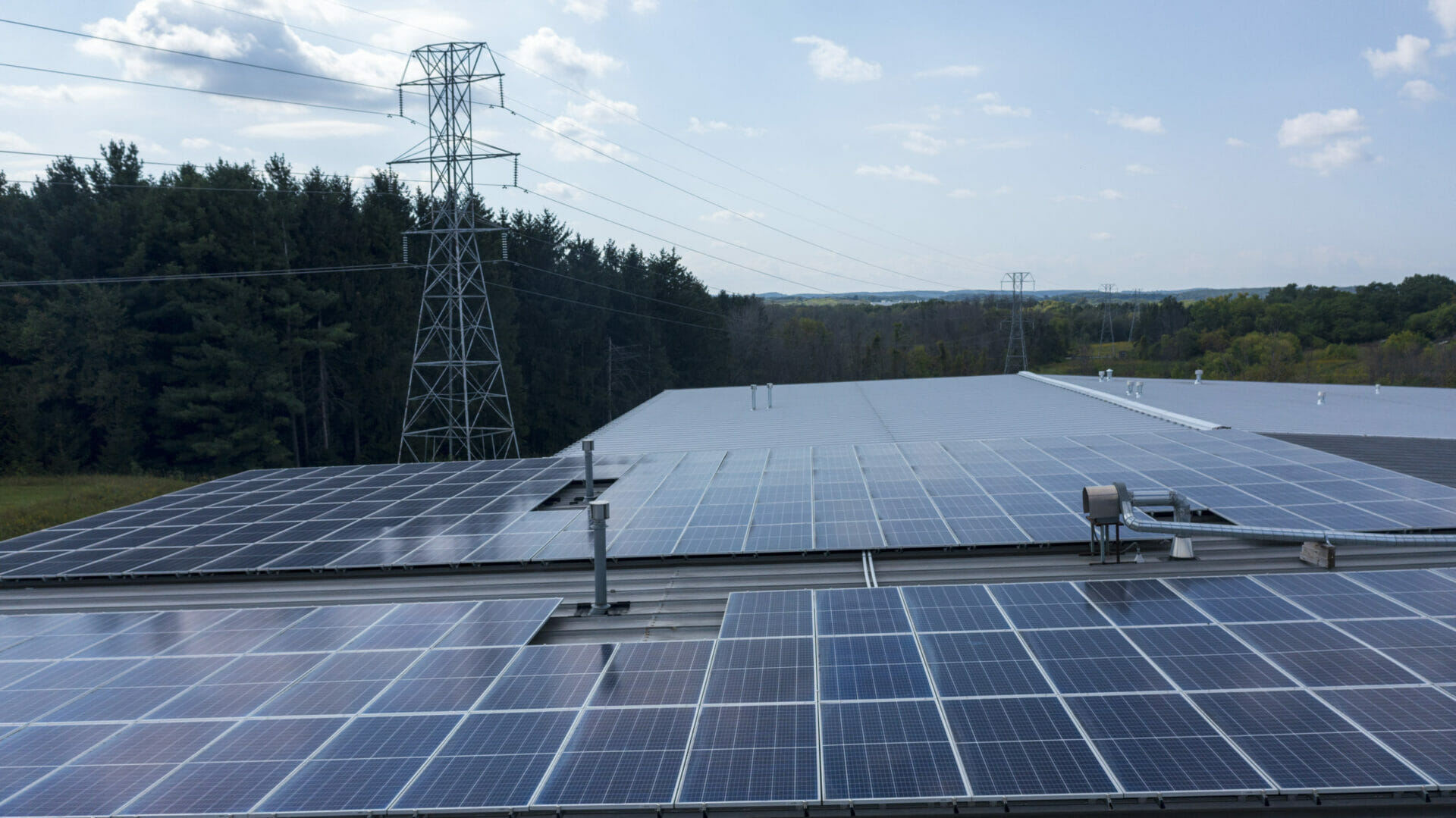
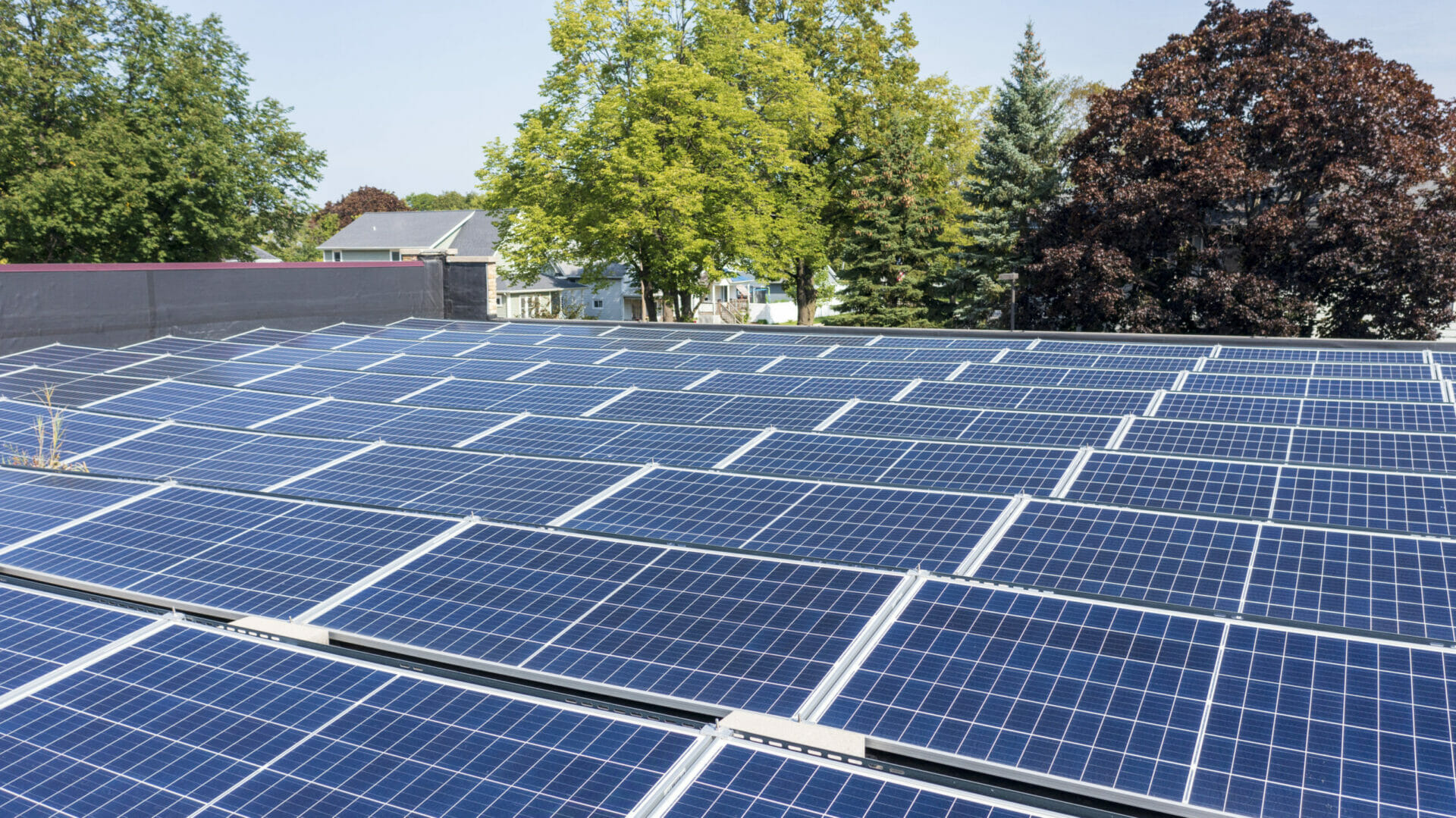
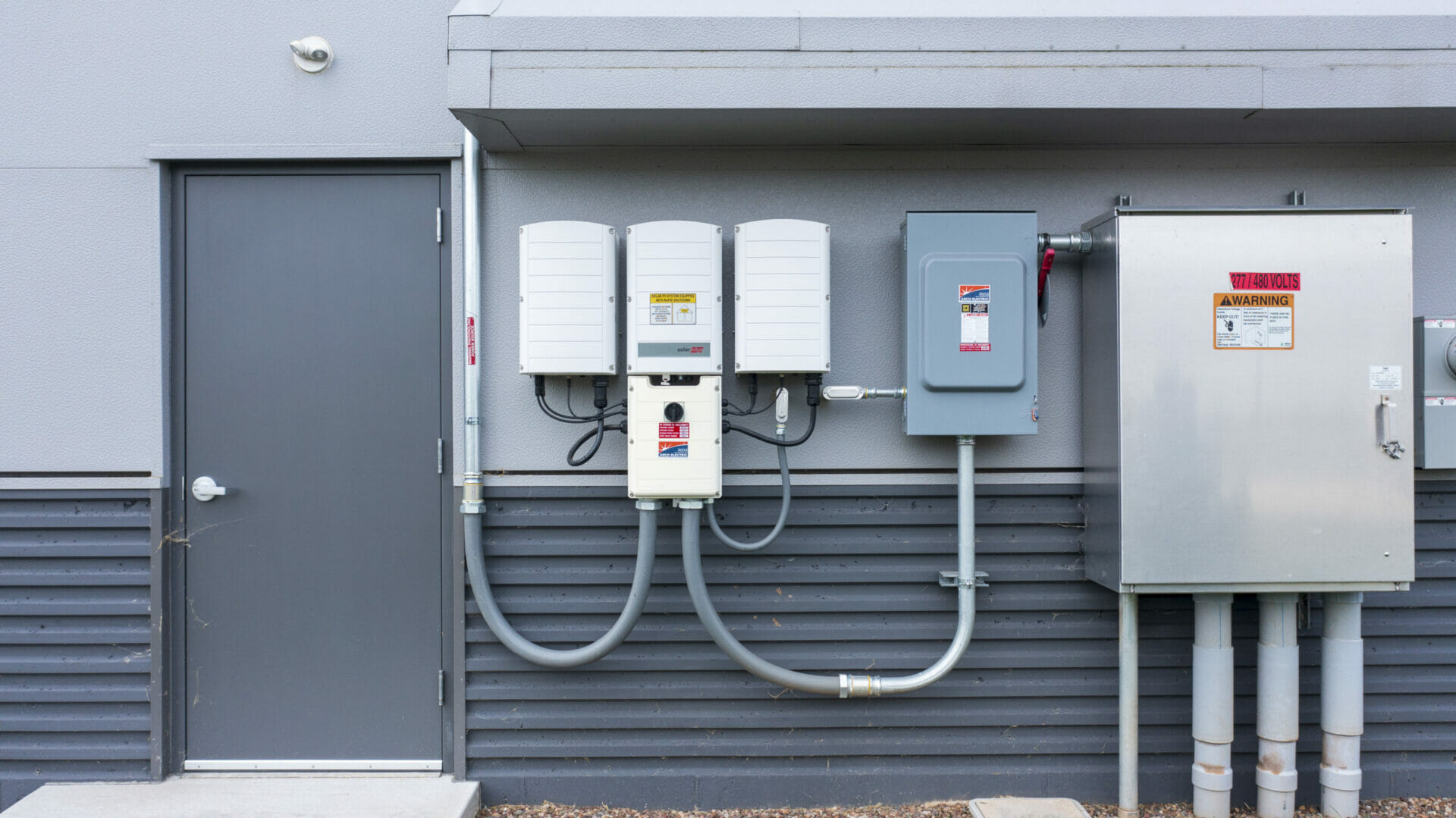
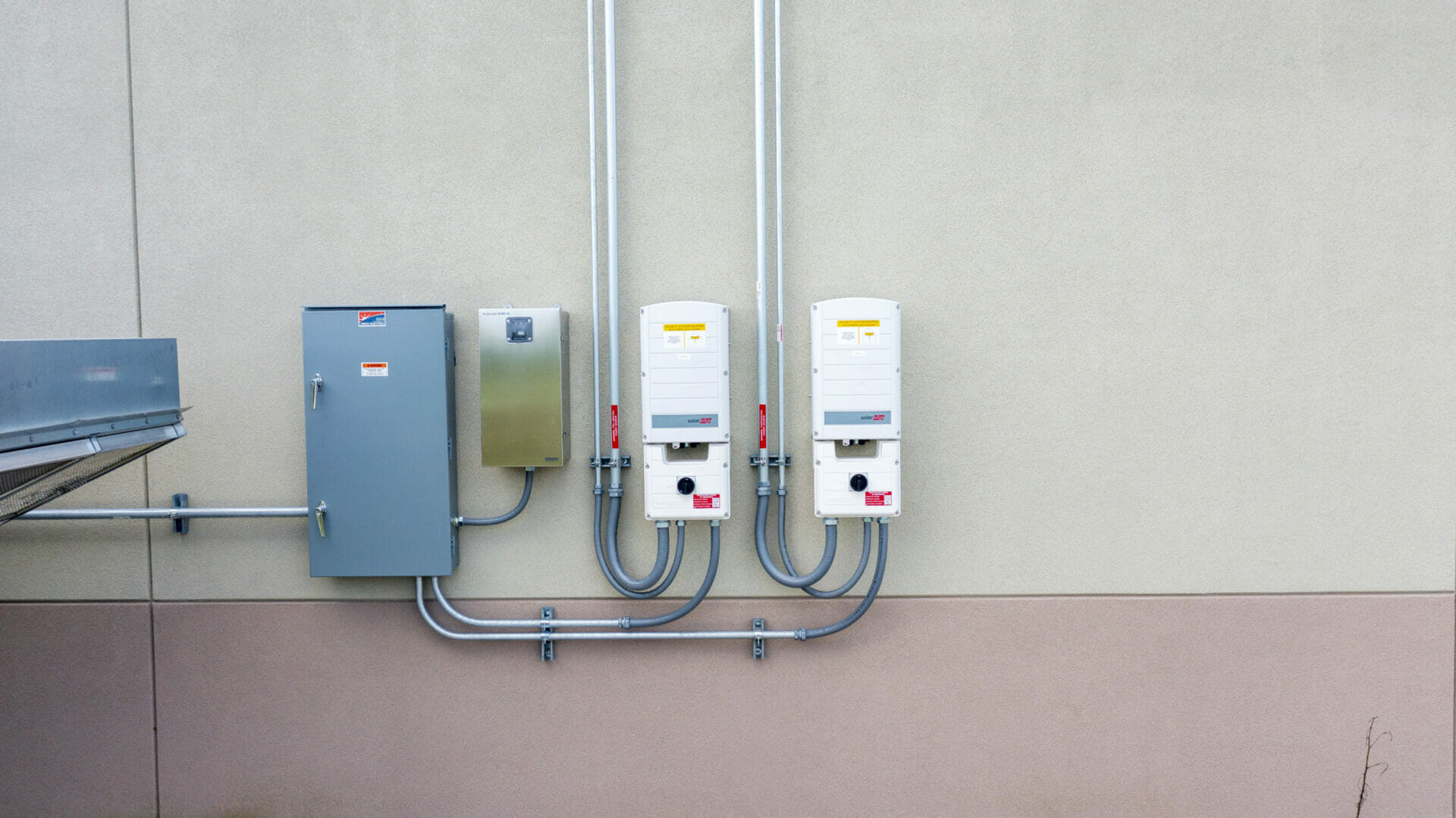
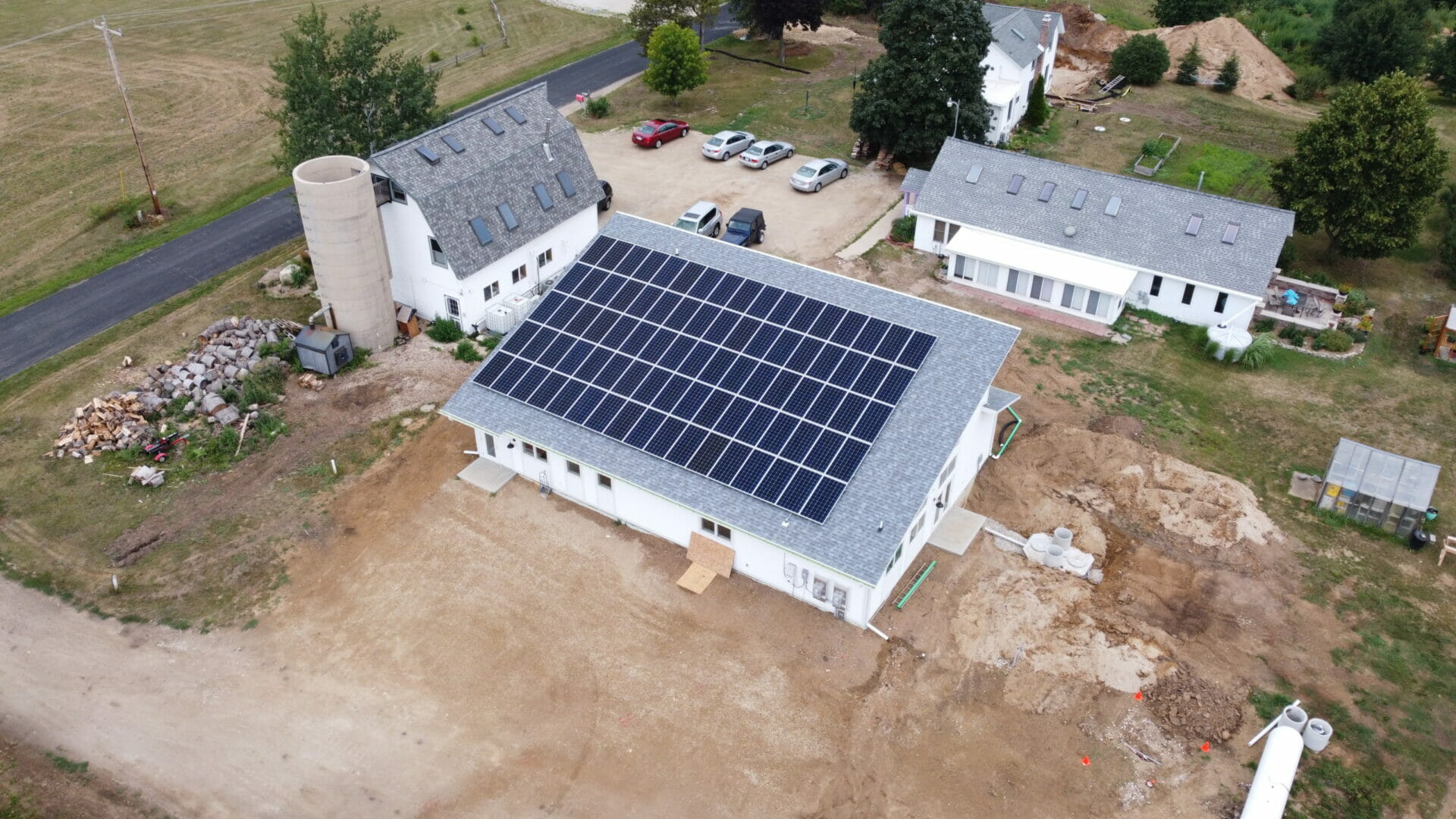
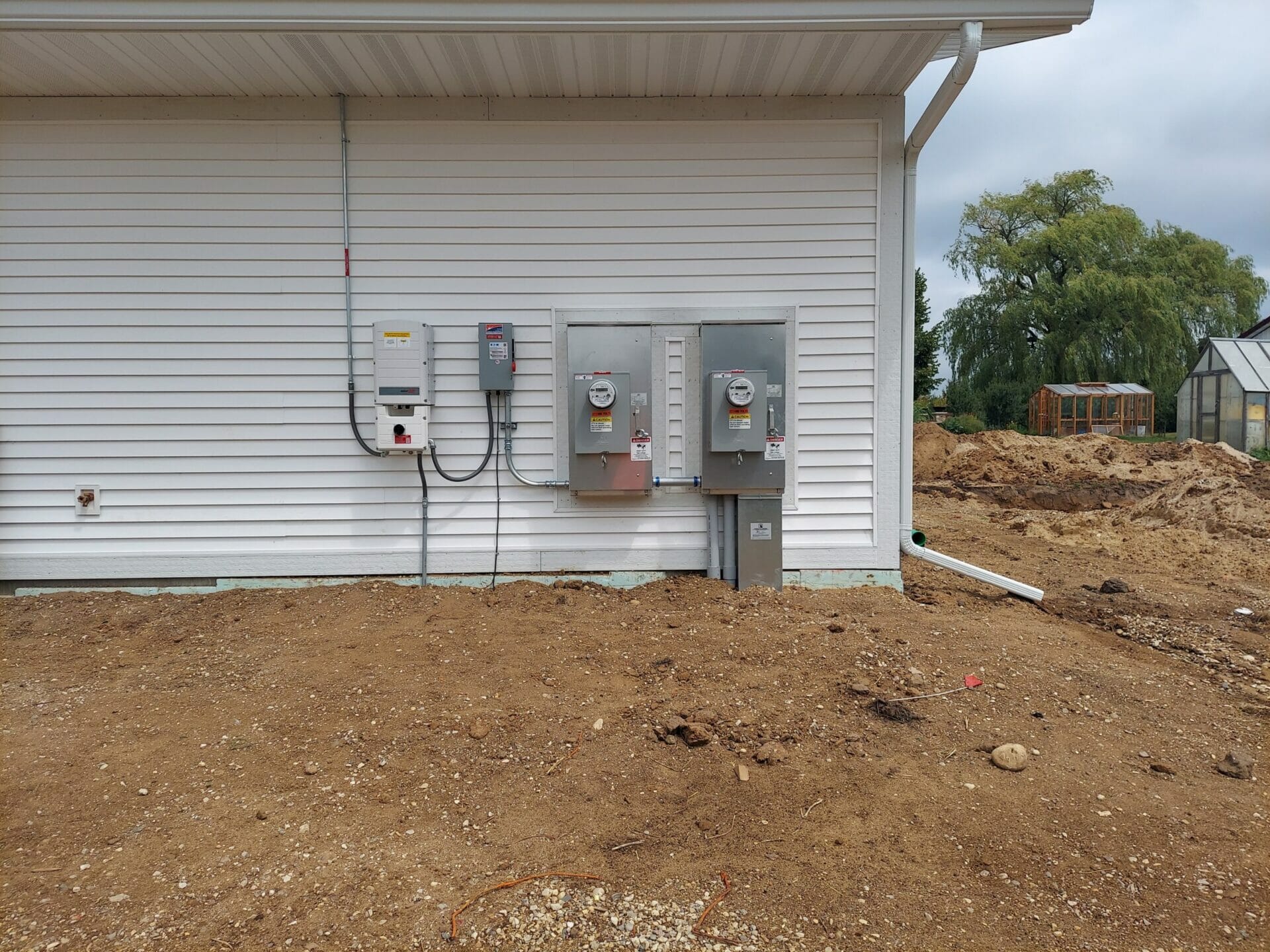
Solar panels rely on photovoltaic (PV) cells to convert sunshine to usable electricity. When photons from the sun’s rays hit these PV cells, an electric field is generated, and the movement of electrons through this field creates an electrical current. This current is then processed by the inverter(s), converting it to electricity that can be used in your home. If more electricity is created by your solar array than your household is actively using, that excess energy is then fed back into the local power grid. Meaning if you aren’t home during peak generation time, you may not be getting the most out of your solar.
However, you can preserve your extra energy with solar energy storage. With the addition of batteries like the Tesla Powerwall 3 and Enphase IQ 10C, you can store up to 13.5 kWh at a time, per battery. That means you keep more of the energy that your solar array creates, and have access to your solar during off-peak hours and local power grid failures.

Do I Need Solar Energy Storage?
As the adage goes, “If you don’t like the weather in Wisconsin, just wait five minutes,” and the last few years are no exception. Dramatic shifts in weather patterns continue to create severe storms, high winds, floods, and tornadoes that drastically impact citizens and homes. Throughout 2025, tens of thousands of residents lost power during several extreme weather events, some not seeing restoration until the following day. In Milwaukee alone, over 38,000 homes suffered power outages lasting an average of 10 hours during the August flooding.
These outages have disastrous results, causing sump pump failures, medical emergencies, and overall safety concerns for family homes. Yet, the national averages of the longest power outages have risen from 8.1 hours in 2022 to 12.4 hours in 2025. With solar power and battery backup, your home can operate functionally during these blackouts, even in the most extreme circumstances.
How Long Does Solar Energy Storage Last?
In this modern era, even a short loss of power can have a dramatic impact. Not only do we rely heavily on our technology for communication and daily functions, but sump pumps, medical devices, food storage, heating and cooling, and so much more depend on a consistent energy supply. With solar energy storage, you can keep your home operating even when the power grid fails. Exact run times vary, but with careful management, energy storage systems can provide coverage for up to 48 hours. Below are some common examples of electricity usage and solar battery run times using a single Tesla Powerwall 3.
- Bare Essentials – 48 Hours*
- Includes: Small medical devices, refrigerator, essential lighting, sump pump
- Comfortable Essentials – 20 Hours*
- Includes: Bare essentials plus small kitchen appliances, Wi-Fi, device charging, and additional lighting
- Full Power – 10 Hours*
- Average regular use of electricity for a four-person family
How Much Do Solar Panels & Batteries Cost
The cost of a solar energy storage system can vary greatly depending on several factors, including your home size, average energy usage, and energy storage capacity. However, we at Arch want to empower homeowners to make educated decisions for their energy independence. Our Residential Solar Estimates page provides examples of system sizes and pricing for a quick comparison. For a more tailored solution, use our cost calculator to get a rough estimate, and our Energy Consultants will follow up with you to provide a free, no-obligation quote on your next solar project.
*This calculation is based on the average estimated kW rating per device, the average estimated consistency of use per device, optimal energy load management, and peak battery performance. This estimate is not a guarantee of actual running time.